


Why our products?
- Free shipping on orders over 49 €
- Satisfied customers
- Delivery date is specified within the product description
Arabica vs. robusta: Is there a superior coffee?
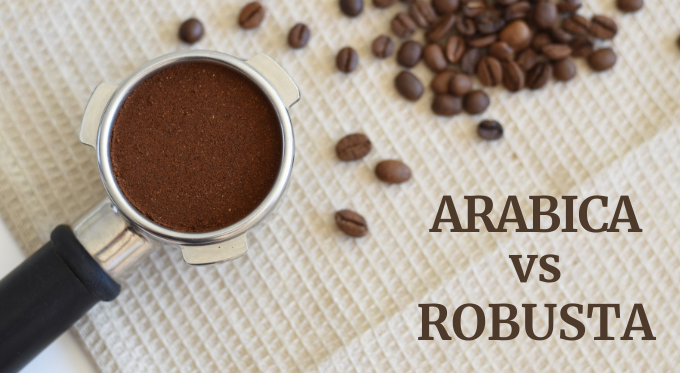
Arabica is a milder and more aromatic variety of coffee with a lower caffeine content. On the other hand, robusta is more intense, bitter, and contains more caffeine. Besides that, arabica comes from the Coffea arabica plant, while robusta grows on Coffea canephora.
They're fundamentally different from each other, from the shape of the bean to the caffeine content to the way they behave during roasting and brewing. If you believe that arabica equals good coffee and robusta equals bad coffee, get ready to face a few surprises
What is arabica and why is everyone obsessed with it
Arabica makes up around 60-70% of the world's coffee production. This popularity is mostly credited to its rich and diverse profile of flavor. In a well-roasted arabica, you can recognize notes of fruit, chocolate, caramel, or florals.
Arabica coffee beans contain up to 9% more sugars and lipids than robusta. These can be caramelized and subsequently developed into complex aromas during roasting. But cultivating arabica is no walk in the park – or a plantation, if you would. Coffea arabica needs an approximate altitude of 600 to 2000 meters, stable temperature from 15 to 24°C, and starts to yield fruit only after four to six years.
It's susceptible to pests and diseases and therefore requires meticulous care. These difficult conditions often result in the higher price and suddenly, the ever-present '100% Arabica' sticker on so many premium coffee labels start to make more sense.
Here's an interesting fact about arabica! According to genetic research, arabica has one surprising ancestor. One of its 'parents' is actually Coffea canephora – or robusta. This means arabica is a distant relative of its biggest rival.
If you'd like to find out how does a high-quality single-origin arabica actually taste, try for example Brazil Dolce Diamantina with its slightly nutty finish, or Organic Peru SHB Pichanaki Grade 1, which ranks among the best of Peruvian coffees.
For those who enjoy something a little unconventional, we recommend Nicaragua SHB EP Maragogype – a variety with a distinctly large bean you'll love from the first sip. It's sweet, soft, elegant, and just right.
Robusta deserves a second chance
Robusta is often unfairly labelled as an inferior counterpart to arabica. Coffea canephora grows in lower altitudes, can withstand higher temperatures and humidity, and yields first fruits as soon as two to three years after planting. It's naturally more resistant to pests, which is, among other factors, thanks to the higher caffeine content that serves as the plant's natural repellent.
One of the areas that robusta easily dominates over arabica is the caffeine content. While arabica only gets around 1,2-1,5% of caffeine, robusta can offer almost twice that amount around 2,2-2,7%. This has a major influence on the flavor. Robusta is intensely bitter, dense, with earthy, nutty, or chocolate notes.
It lacks the playful, fruity acidity of arabica, but on the other hand, it offers a full body and an amazing crema that makes it an indispensable part of many an espresso blend. High-quality robusta may surprise you. The largest producer in the world is Vietnam – we recommend at least trying Vietnam Robusta Grade 1.
Or you can indulge in India Robusta Cherry AA, with a full body and a pleasant bitterness, or maybe Guatemala Robusta El Pacifico, which will break down all the stereotypes about Central American coffee.
Main differences between arabica and robusta
Arabica and robusta are not enemies. They represent two different worlds of coffee where each has its own attributes. So it doesn't make sense to label arabica as better and robusta as worse. Instead, you should try to find out what you expect from your coffee.
Are you looking for a milder and diverse taste? Choose arabica. Do you need a proper kickstart in the morning? Robusta will take care of that. And if you want to give a chance to both, look for an espresso blend with a good ratio.
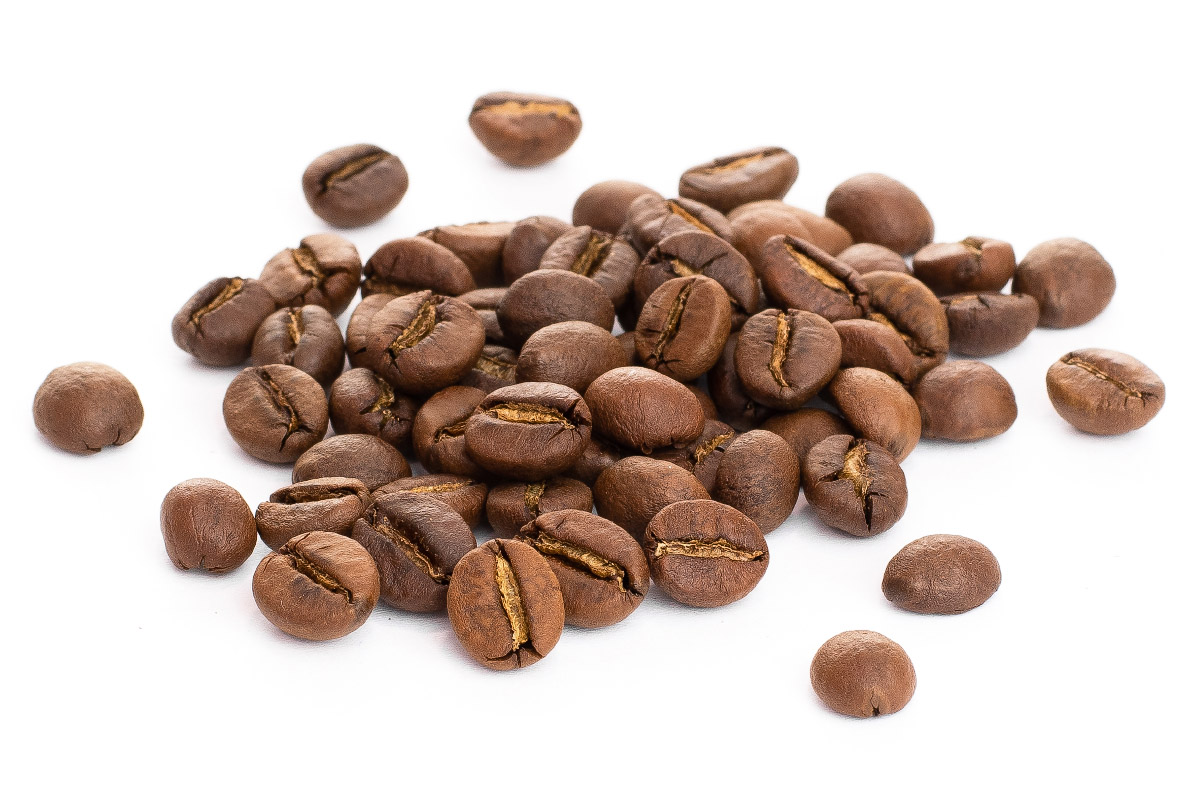
And if you're still lost in all the differences, we've made a neat summary.
| Attribute | Arabica | Robusta |
| Scientific name | Coffea arabica | Coffea canephora |
| World production | cca 60–70 % | cca 30–40 % |
| Altitude | 600–2 000 m | 200–600 m |
| First harvest | in 4–6 years | in 2–3 years |
| Caffeine content | 1,2–1,5 % | 2,2–2,7 % |
| Sugar content | 6–9 % | 3–7 % |
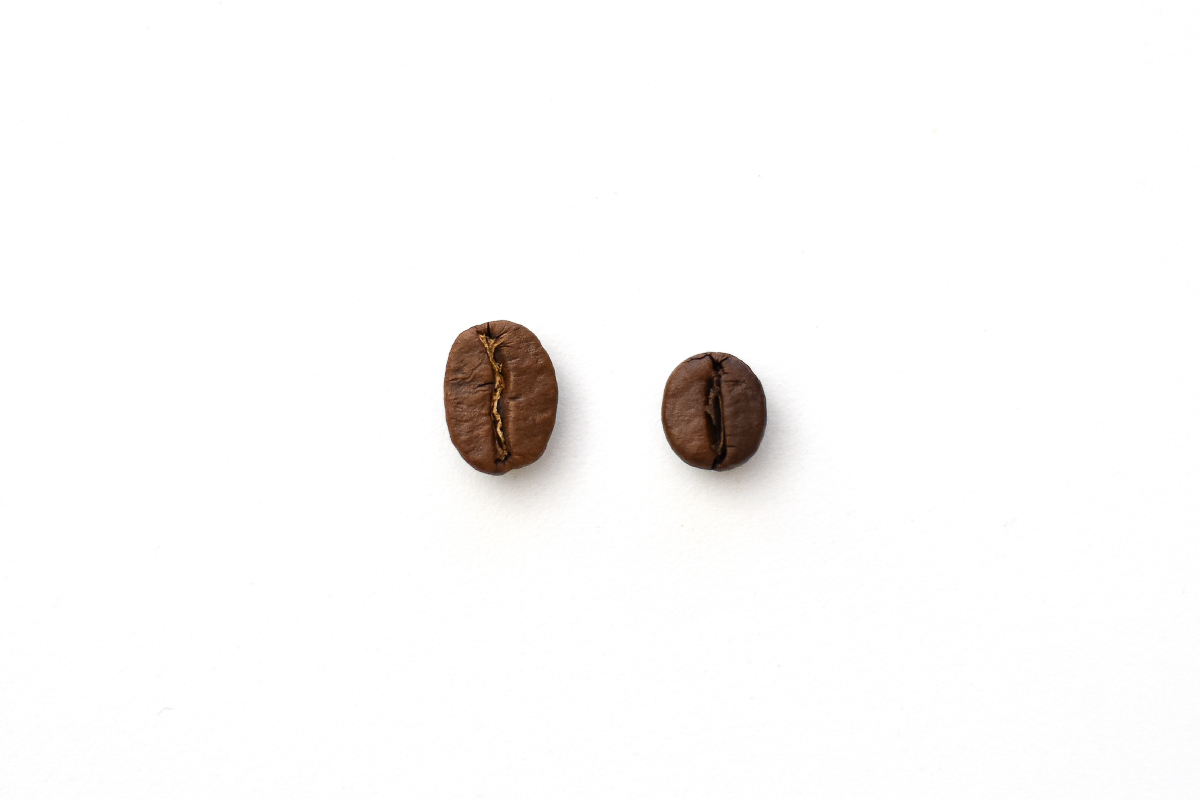
| Bean shape | more oblong, with an S-shaped groove | rounder, straight groove |
| Flavor profile | mild, fruity, floral, acidic | bitter, earthy, dense |
| Crema in espresso | milder, lighter | rich, thick |
| Price | higher | lower |
| Resilience | lower, more susceptible to disease | higher, resistant to pests |
No matter what you decide for, the quality of the roast as well as origin of the coffee will play a major role. It really pays to choose coffee carefully and, if possible, somewhere you can find out something about each option. In ManuCafe, we swear by Refreshing Quartet Espresso Blend, which comes in handy when the schedules are just bursting at the seams.
When to choose arabica and when robusta?
The choice between arabica and robusta has nothing to do with quality, but instead with personal preferences and brewing methods. If you enjoy milder, more aromatic coffee with sweeter notes and pleasant acidity, arabica is right for you. It's suitable for filter coffee, pour-over methods, and for espresso.
Robusta, on the other hand, is perfect for individuals looking for a more intense experience, with more caffeine, compact body, and the signature bitterness. If you enjoy traditional Italian espresso with a beautiful crema, then robusta (at least as a part of a blend) is basically indispensable for you.
And then there are coffee blends. These take the best of both worlds – arabica adds aroma, sweetness, and depth of flavor while robusta adds strength, caffeine, and that beautiful, thick crema. That's the basic principle of espresso blends such as Flavors in Tandem, where we carefully balanced the ratio of both varieties to make the resulting coffee harmonious and cohesive.
Are there other coffee varieties?
Together, arabica and robusta cover over 98-99% of the world's coffee production, but they're not the only varieties. Botanists list more than 100 varieties of the coffee plant. However, most aren't cultivated commercially. We'll give a mention to Coffea liberica, which mostly grows in the Philippines and Southeastern Asia and excels with a different, woody and smoky flavor profile.
Liberica is also the source of Excelsa, which is known for its fruity, wine-line notes. However, the chance of you coming across any of these exotic coffees in regular stores is next to non-existent. There is also the Coffea charrieriana variety from Cameroon that's entirely caffeine-free. Nature really thinks of everyone.
No wrong choices, only unfulfilled expectations
The entire world goes through roughly two billion cups of coffee a day. To get a single cup of espresso, we need an estimated 140 litres of water. Whether you end up brewing arabica, robusta, or a blend of both, remember one thing: make sure to properly enjoy your drink!