


Why our products?
- Free shipping on orders over 49 €
- Satisfied customers
- Delivery date is specified within the product description
Facts & myths about storing coffee
Content
Coffee is extremely susceptible to airflow, light, humidity and even temperature changes. If you don’t follow precise storage instructions, your coffee will likely quickly degrade. The best way to store coffee is to simply not store it at all – in the ideal circumstances, you would get fresh coffee every day. But for most of us, that’s very unrealistic, so let’s take a look at how to store coffee to last you as long as possible.
Rule #1 – Buy whole bean
Whole coffee beans are enveloped in a protective film that helps them keep their aroma fresh. Once the coffee is ground, it oxidizes much quicker. That means that aromatic compounds and essential oils start evaporating much faster. Whole bean coffee stays fresh a lot longer, because the insides are protected from oxygen.
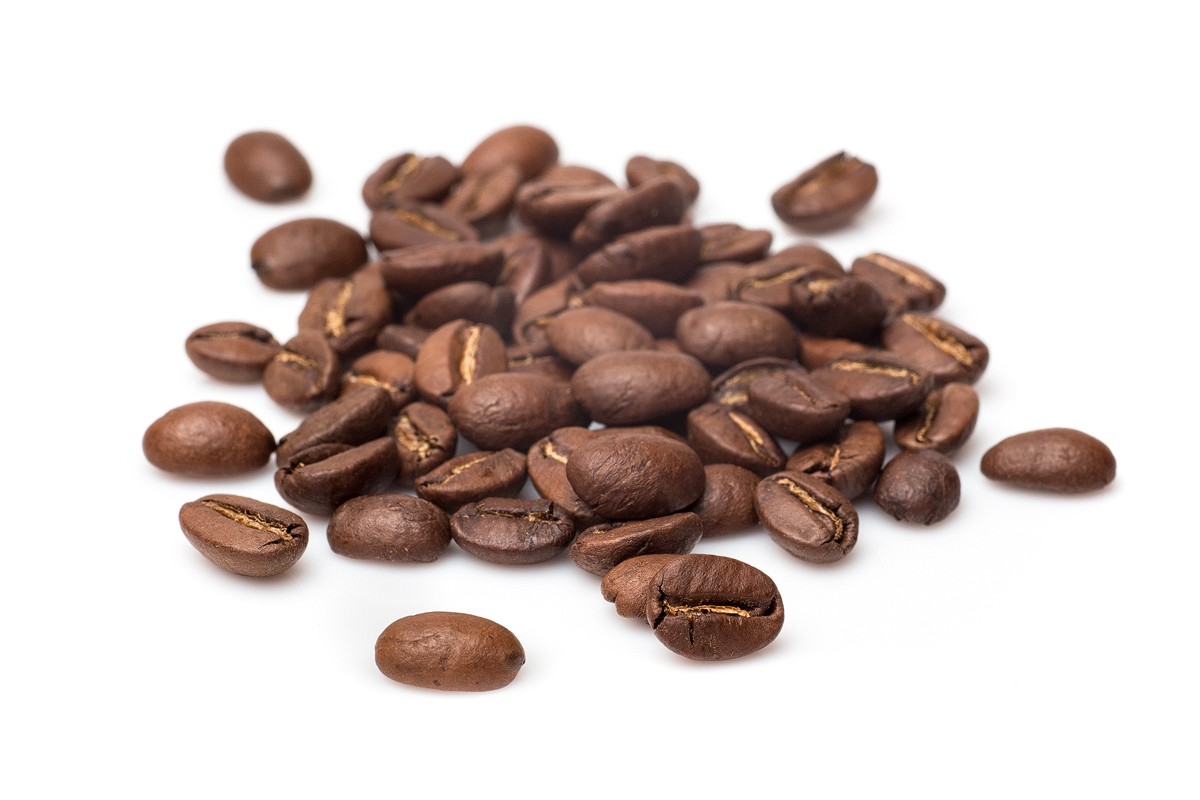
What’s more, freshly ground coffee has way more intense taste and aroma due to the volatile organic compounds that are released shortly after grinding. If you grind your coffee right before you intend to use it, you don’t need to worry, but storing ground coffee for long periods of time will negatively affect its quality.
And buying whole bean coffee has even more benefits:
- You can grind the exact amount you need at the moment.
- You can control the coarseness depending on how you want to prepare your coffee.
Of course, you don’t need to grind your coffee daily. If you have a suitable storage box, you can make an amount in advance that will last you 2-3 days. We don’t recommend grinding any more than that, though, at least if you want to avoid impacting the taste.
Rule #2 – Let it breathe
We’re sure you’ve heard that fresh coffee is the best dozens of times. But how can you distinguish fresh coffee? Is it freshly roasted, or freshly ground?
Ground coffee loses its freshness, aroma, and taste incredibly fast, so we recommend drinking it right after grinding. Roasted coffee tastes much better after a “rest” rather than freshly roasted. During the roasting process, there’s a whole array of chemical reactions that release carbon dioxide, which is crucial for coffee. It marks its freshness, influences how your coffee will extract and even plays a role in packing and storage.
On the other hand, too much of this gas isn’t good for the coffee, either. It prevents your grounds from extracting properly, so it’s important to leave freshly roasted coffee to rest for some time – a period during which the coffee can “degas”. Experts recommend 2-16 days, so the coffee can properly get rid of excess carbon dioxide and reach the maximum possible quality. The length depends on various factors such as the level of roasting, the variety of your coffee, but also the method of preparation.
Rule #3 – Month’s worth only
So, you came across an awesome deal at the supermarket. Two for one? Or maybe you just like to keep stocked? But in the case of coffee, you should think twice. With coffee, less is more.
That’s because coffee expires fast. Even more so if it’s already been ground. Always get only as much coffee as you can reasonably go through withing a month and ideally spread it out into multiple batches in airtight containers. The less oxygen your coffee comes it contact with, the fresher it will be.
Rule #4 – Choose the right storage space
If you want to keep your coffee as fresh as possible, you need to pick the right place for storage.
- Dark & cool. Coffee and light don’t really go together. If you leave it out in the sun or direct light for too long, it will very quickly begin to oxidize and lose aroma as well as taste. Store it in a dark place such as your pantry and as far from heat sources such as stoves or ovens as possible.
- Dry. Another enemy of coffee is humidity. It will accelerate the process of aging and what’s more, it can cause bacteria and molds to spread. And if your ground coffee becomes too humid, it will form undesirable lumps.
- With minimal airflow. Dark, non-transparent containers that do not let through light and can be hermetically sealed are your best bet. Coffee will stay fresh for much longer than in low quality containers or paper sacks.
So, where do you put it?
There’s a number of options for you:
- Airtight containers - these special jars prevent excessive airflow. Airtight containers usually come equipped with a silicone seal or a special lock mechanism, so they also protect your coffee from humidity and odors. However, they cannot protect your coffee from the oxygen that’s already trapped inside.
- Vacuum containers - they have a special mechanism which not only prevents air from getting in, but can also push it out. By getting rid of the oxygen inside, your coffee can stay fresh for a really long time in comparison to the other methods.
- Bags with a degas valve - these use the same technology as vacuum jars. One-sided mechanism will push carbon dioxide out while preventing air from getting inside the bag.
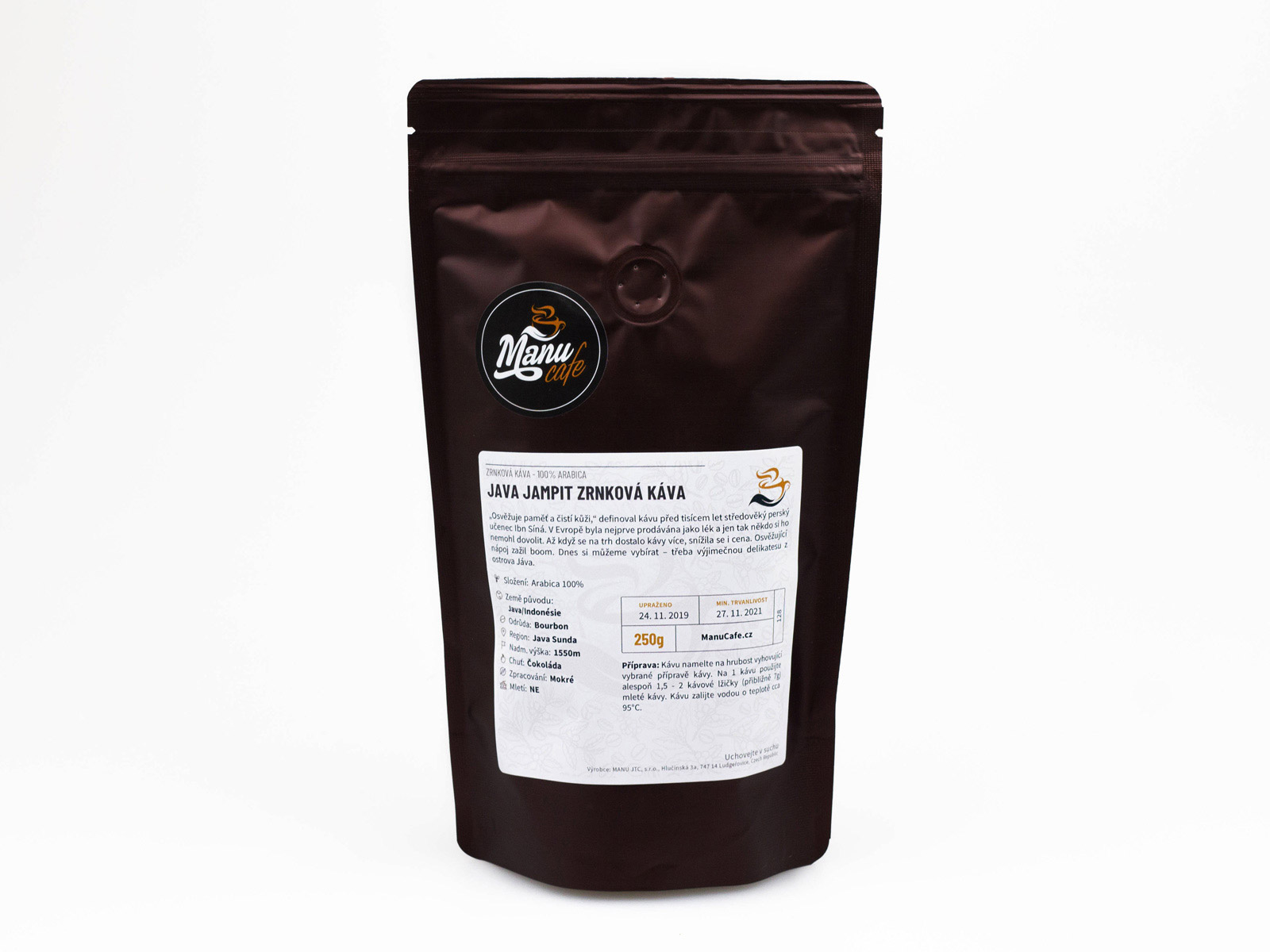
Our coffee is packaged in special, hermetically sealed bags to protect it from humidity, light and odors. You don’t need any extra containers, just keep them in the original packaging.
Rule #5 – Fact-check
There’s a whole lot of misinformation about storing coffee, from the idea of keeping it in the fridge to storing it in plastic containers. But what’s the actual truth? Let’s debunk the most common myths about storing coffee.
1. You should refrigerate your coffee
Your fridge may be a “dark and cool place” with minimal airflow, but that’s not all it takes. By taking your coffee out and putting it back constantly, you’ll cause frequent temperature changes, which will cause your coffee to deteriorate. It can absorb humidity and develop molds or even absorb some of the aromatics from the fragrant foods we tend to keep in our fridges such as cheese, deli meats, and some kinds of veggies. This will negatively affect not only the aroma of your coffee, but also its taste. On the other hand, if you have old coffee, it’s the perfect way to get rid of unwanted foreign odors wherever you need.
2. You should freeze your coffee
Should you really? Some coffee experts are strictly against it. There’s a chance that, during the steep temperature change, the fats and oils that are responsible for the coffee’s flavor will separate, meaning the aroma will dissipate. Nevertheless, some people love freezing their coffee. They claim that frozen coffee doesn’t lose any freshness at all and that it significantly improves shelf-life.
If you do decide to freeze your coffee, we recommend you only freeze it one time – once your coffee is thawed, don’t put it back into the freezer. You also shouldn’t keep your coffee frozen for more than 3 months and take the coffee beans out of the package only after it’s thawed completely.
3. You should keep coffee in plastic containers
This one you definitely shouldn’t do. Cheap plastic containers often tends to absorb foreign odors and then transfer them into your coffee. If you insist on plastic containers, make sure they’re high quality and durable, so they don’t get easily damaged. Paper bags, which are too porous and let in oxygen as well as humidity and odors, are a similarly bad choice.
The best stuff you can reach for when storing coffee is glass, ceramic and stainless steel. These materials are durable and won’t influence the flavor of your coffee. And don’t forget – whichever container you decide for, make sure to keep it clean.
4. Ground coffee has the same shelf-life as whole-bean
To prevent your coffee from losing quality, we recommend sticking to the 15:15:15 rule – 15 months after the harvest, 15 days after roasting and no more than 15 minutes after grinding. In other words, you can store your coffee for some time, but ideally only grind it before you intend to brew yourself a cup.
So, where will you store yours?
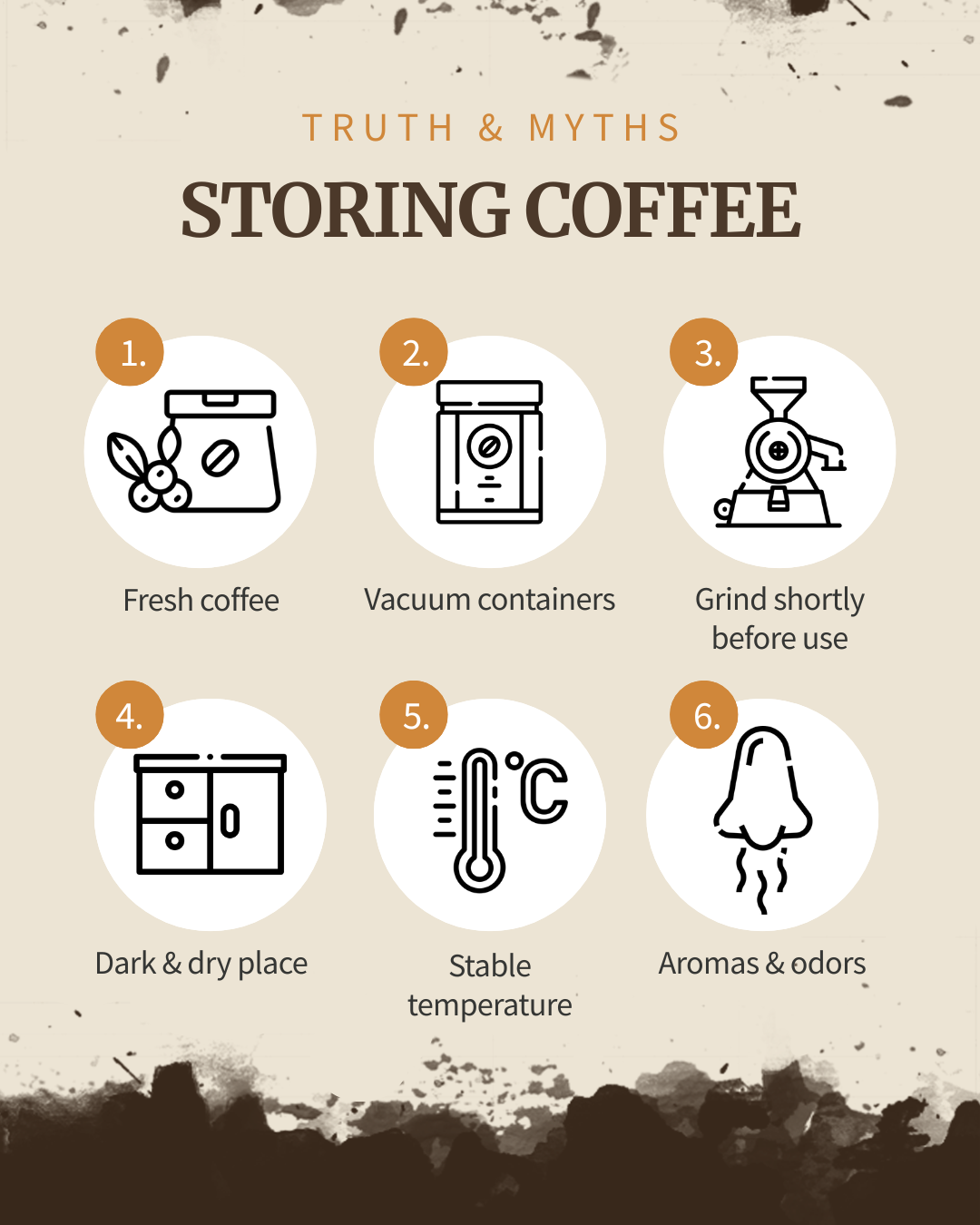
Storing coffee is not rocket science. Just keep these rules in mind:
-
Keep it in a dry and cool place.
-
Avoid changes in temperature.
-
Use airtight or vacuum containers.
-
Don’t let your coffee absorb humidity or foreign odors.
-
Only store fresh, high-quality coffee.
-
Grind your coffee shortly before brewing.
If you store your coffee properly, your reward will be a perfectly fragrant, delicious cup of coffee. And isn’t that worth it?