

Why our products?
- Free shipping on orders over 49 €
- Satisfied customers
- Delivery date is specified within the product description
Benefits of St. Benedict's thistle
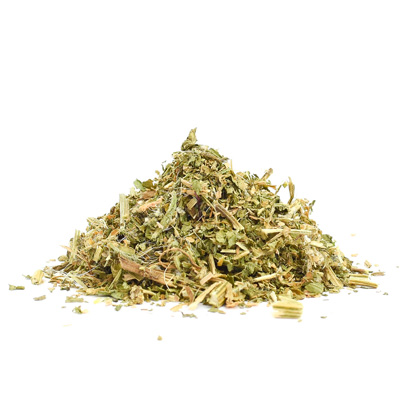
The main reason for using the St. Benedict's thistle is no longer the case in our country. This plant was a used fighter against bubonic plague.
Holy or Blessed thistle. These and many other names are evidence of the great respect the thistle has earned for its contribution to our health. Folk healers and medieval scholars considered it an accessible yet remarkably capable herb. Benedictine, Latin for Cnicus benedictus, is an annual herb that can grow up to 60 centimetres tall. It is characterised by its bright yellow flower and stem with leaves densely covered with fine hairs. The plant is native to the area around the Mediterranean but can also be found elsewhere in sunny, drier locations with good-quality soil.
St. Benedict's thistle is an edible herb. You can also find it in various alcoholic drinks where it has a pleasantly bitter taste. It is harvested and then dried at a low temperature mainly for health benefits. The infusion from the stems can be drunk, but many people prepare a bath or compress from it.
Consumption of benedict should be avoided by pregnant women and those with stomach ulcers. It can be drunk in reasonable quantities in other cases for up to eight weeks, after which it is better to observe a break of several weeks.
Approved health effects:
- Normal digestion
- Normal respiratory system function