

Raw Organic Cocoa Beans Unocade Premium – Sorted

For three of these, you can get a rabbit. Or save up a hundred and make a girl happy. Cocoa beans used to serve as a currency during the times of Aztecs, and while those times are long gone, their amazing properties are still extremely valued. They're a welcome source of antioxidants as well as theobromine and caffeine. Better than frech fries! Enjoy them in the car, in front of the TV or with a good book. These Ecuadorian cocoa beans are among the finest in the world.
Shipping methods
| Nizozemská pošta HD - zásilkovna | 1,00 € | |
|---|---|---|
 DHL DHL |
4,90 € |


Ingredients
100 % Cocoa beans BIOFlavor
Arriva Forastero cocoa beans are used to make exquisite single-origin chocolates. It is therefore not surprising, that their taste is truly exceptional. They offer a rich chocolate body with delicate notes of nuts, flowers and wood.
Origins

Although in Europe we know cocoa mostly as a fine powder, whole cocoa beans are also gaining a lot of popularity on the world market. Why? They are an excellent alternative to various unhealthy treats and bring originality and an interesting addition to our diet.
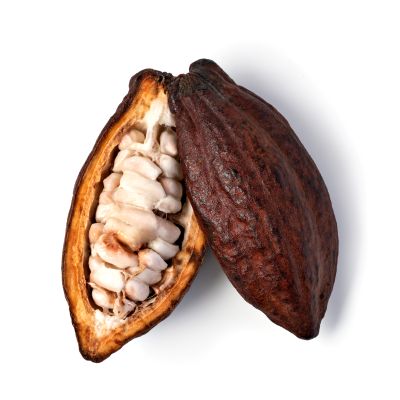
Cocoa beans are nothing more than the seeds of the fruit of cacao tree. They're most often made into our beloved chocolate. Before we get to the beans themselves, it is worth mentioning the plant that produces them. Although the cacao tree has been around for 5,000 years, it was only in the 18th century that it was given its botanical name. A famous Swedish naturalist gave it the name Theobroma cacao, meaning "food of the gods". It's an evergreen tree native to South America.
It grows to 5-8m in height and has dark green, glossy leaves up to 30cm long. It flowers almost all year round. The fruit is an elongated yellow, brown or red berry with 10 fine longitudinal furrows. They contain 4-14 seeds, reaching 2cm in size.
Trees are harvested 3-4 times a year with exceptional care to avoid damaging the point where the fruit stem attaches to the tree. This is where the next flowers will appear. It is said that one person can harvest about 650 beans per day. These are then opened, usually with a machete, and the fleshy parts are removed. The farmers spread the sweet white flesh and seeds on grids where they ferment for a few days. This both determines the final flavor of the cocoa and breaks down the remaining pulp. The beans are then raked over while being dried on large areas, either by direct sunlight or in drying ovens. Cocoa beans from small plantations usually cleaned by "dancing" on them barefoot. The contact with red clay makes them glossy, gives them a nicer color and apparently protects them from mold. Sometimes, they're placed on cow hides. Finally, the dry cocoa beans are packed into jute bags.
Farmers work with three main varieties of cacao trees – Forastero, Criollo and Trinitario. Forastero makes up to 95% of the world's cocoa production.
Ecuador Unocade organic cocoa beans also come from the Forastero variety, a special Ecuadorian arriba. It is intended for the production of fine aromatic cocoa. And, of course, there's a legend to go with it: apparently, a Swiss chocolate maker came across local growers carrying freshly picked beans upstream of Ecuador's Guavas River. When he asked them where the cocoa came from, they replied "de rio arriba", meaning "upstream". That was in the 19th century, and ever since, cocoa from the Forastero Arriba variety has been used to make the most delicious chocolates.
And one more thing. These beans didn't get their organic label for nothing. Their all-natural cultivation is guaranteed by the Unocace Farm, an association of more than 1,730 small farmers from the Guayas, Los Rios, El Oro and Bolivar regions. They farm over 10,000 hectares of land and produce 1,500 tonnes of quality cocoa per year. Through joint marketing, they are able to sell it at appropriate prices and donate part of the profits to the development of social programmes in their own communities.
Demand for cocoa continues to grow. Unroasted cocoa beans are classified as a so-called superfood because they contain perhaps the highest amounts of antioxidants out of any food. They support mental and physical well-being.
Benefits of coffee

Hot chocolate & Hot cocoa packaging preview
Our quality aluminum packaging lacks any bold graphics, as we’d rather focus on the taste of our products. Thanks to the hermetic seal, this container helps the contents keep their freshness and protect them against humidity, light or foreign odors.
Instructions for preparation
Serve as a snack.
Store in a dry, dark place. Leave the bag half-opened and allow plenty of air-flow.


| Energy value: | 520 kcal |
| Fats: | 52 % |
| Proteins: | 14 g |
| Carbohydrates: | 20 g |
| Theobromine: | 1,3 g |
| Caffeine: | 0,1 g |