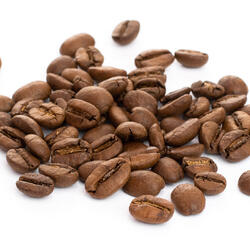


Jamaica Blue Mountain – Light Roast Coffee

There’s no need to rush in Jamaica, and that goes for the slow-ripening Blue Mountain coffee, too. Surrounded by the chilly mountainous climate, in the fertile volcanic soil, this coffee has plenty of time to mature into something incredible. Make it in a dripper, you’ll agree that the patience is worth it. It’s perfectly balanced and full of refreshing citrus, milk chocolate, and nutty notes.
Shipping methods
| Nizozemská pošta HD - zásilkovna | Delivered by 22. 10. | 1,00 € |
|---|---|---|
 DHL DHL |
Delivered by 22. 10. | 4,90 € |


Ingredients
100 % ArabicaTaste & Crema
Blue Mountain is synonymous with a perfect balance of flavors. The light roasting creates a rich flavor profile for filter coffee, a guaranteed treat for even the pickiest coffee lovers. You can discover notes of fruit, florals, and dark chocolate. The slight acidity brings in a pleasant liveliness while the creamy body leaves a smooth aftertaste on your palate. This unique experience is all thanks to the slow ripening of the coffee fruit and precise handling from harvest to roasting. It’s an experience that’s not easily forgotten.
Origins

"It is the most beautiful island that eyes have ever seen; it seems as if the mountains and the land touch the sky,"" are the supposed words of Christopher Columbus in 1494. Yes, he was referring to Jamaica, specifically the Blue Mountains region. They’re located in the eastern part of the island, about 45 km long and 19 km wide. They rise from the coast to a height of over 2,000 m, and are extremely steep. If the weather is favorable and the sky is clear, you can see all the way to the island of Cuba from the highest point – Blue Mountain Peak.
The Blue Mountains are shrouded in fog almost all year round, hence their name, since it makes them appear to be blue-gray in color. The local climate is very diverse, with temperatures at the foot of the mountains at around 27°C while the peaks reach only around 5°C. What’s more, local fauna and flora are similarly diverse. The lush vegetation includes 800 species of endemic plants, and the mountains are home to the world's second-largest butterfly, Papilo homerus, and one of the largest migratory bird habitats in the Caribbean. Some parts of the mountains are included in the Blue and John Crow Mountains National Park, which was established in 1992 by the Jamaican government to preserve the remaining forests and protect the island's largest body of water.
In addition to tourists and admirers of natural attractions, the Blue Mountains also attract visitors to coffee plantations. The first coffee seedlings were brought in 1728 by Governor Sir Nicholas Lawes from the island of Hispaniola. Together with Cuba, Puerto Rico, and Jamaica, it forms the Greater Antilles archipelago. The boom in coffee cultivation in Jamaica dates back to the first quarter of the 19th century, when plantations were expanded across the slopes of the Blue Mountains. It should be noted that even then, local coffee had a reputation as one of the best in the world.
Today, about 25,000 farmers are involved in the cultivation, harvesting, and processing of coffee. They farm on small plantations at an altitude of 900-1,600 m. Coffee trees are harvested by hand from January to February, and the harvest is brought or transported to collection stations every day. There are more than 80 of these stations in Jamaica. The freshly picked coffee cherries are checked there to remove any green or insect-infested ones. The coffee is then washed to remove the skin and plant mucilage. The wet coffee beans are spread out by station employees on concrete slabs (barbeques), where they are usually dried in direct sunlight for 5 days. If the weather isn’t ideal, the coffee is dried in special dryers. The next step is to let the coffee “rest”; The beans are poured into bags and transported to a warehouse, where they remain for at least 10 weeks. This is a critical stage in coffee processing, during which certain unique and desirable characteristics develop. Finally, the husks are removed from the beans, the coffee is polished, and carefully sorted.
The Blue Mountain Coffee certificate is a guarantee of the highest quality. The standards are set and monitored by the Jamaica Coffee Industry Board. This is one of the reasons why the coffee maintains its top parameters over the long term. Jamaica accounts for only 1% of the global coffee market and 90% of that goes to Japan. It’s not easy to bring this rarity to Europe. However, coffee enthusiasts and lovers of true gems will find their way to Jamaica Blue Mountain.


Benefits of coffee


Coffee packaging preview
Our quality aluminum packaging lacks any bold graphics, as we’d rather focus on the taste of our coffee. It always comes fresh thanks to degassing valve, which releases the gases that occur after roasting. Thanks to the hermetic seal, this container helps the contents further keep their freshness and protect them against humidity, light or foreign odors.
Instructions for preparation
- Coarsely grind your coffee.
- To a V60 filter, add 1g of coffee per 14ml of water.
- Using circular motions, cover the coffee with boiled water (93°C).


Are you looking for inspiration? Other customers have bought this:
Cuba Serrano Superior – Roasted Coffee
Galapagos SC18 San Cristobal – Organic Roasted Coffee