

Carob (Ceratonia Siliqua) – Powder


Do you crave chocolate from dawn till dusk? Try occasionally switching it for carob. Rich in fiber, minerals, vitamins and antioxidants, carob powder will satiate you just like chocolate but without any of the guilt. It doesn't contain additional sugar or other flavorings and has much less fat than chocolate. And yet it can make a delicious hot cocoa, dessert or a snack.
Shipping methods
| Nizozemská pošta HD - zásilkovna | Delivered by 15. 10. | 1,00 € |
|---|---|---|
 DHL DHL |
Delivered by 15. 10. | 4,90 € |


Ingredients
100 % CarobFlavor
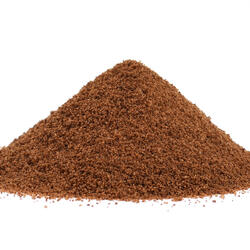
Carob powder tastes like milk chocolate and is naturally sweet. It is light brown and its fine texture means it can be used in beverages or ready-to-eat dishes.
Origins
The tree from which carob is produced has acquired many names. The most famous names include carob, locust tree or St John's bread. Why? Legend has it that its pods saved St John Baptist from certain death. The son of Zechariah and Elizabeth went into the desert to prepare for his future calling as a preacher. As a great ascetic, he lived on what he could find. Roots and fruits of plants, insects, and honey from wild bees. Carob pods gave him the energy to carry out his difficult task. When he became a preacher, he prepared the people for the coming of the Savior. He was an example of virtue, baptizing people in the Jordan River. It is no wonder that the pods of that tree became very popular.
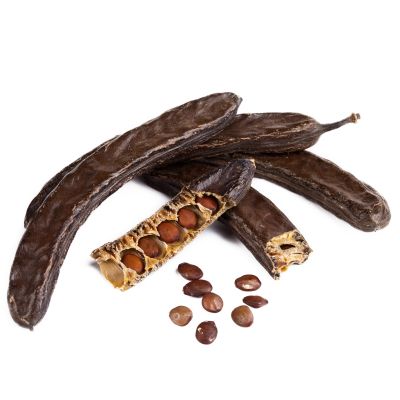
The carob tree (Ceratonia siliqua) is one of the oldest cultivated plants, having existed for more than 4,000 years. It was probably formerly distributed in the Arabian Peninsula and the eastern Mediterranean. Today it is grown in Greece and Italy, but also in Mexico, the USA, Chile and the southern regions of Africa and Australia. The carob tree is not exactly a tall tree. It reaches a maximum height of about 15m. It has a hemispherical crown, 10-20cm long, and leathery leaves. It produces inconspicuous, red-green flowers. The fruit of the carob tree is a leathery pod. It is usually 10-30cm in size, containing 4-10 seeds. The pods are dark brown. The seeds are surrounded by sweet flesh, are oval, slightly flattened and extremely hard when ripe. They were formerly used as weights to indicate the weight of precious stones. From their name (Arabic kharab, Greek kerátion) the carat was later derived. The pods should be harvested from the trees when they are ripe. This occurs between August and October.
They must be sufficiently dry, and must not get wet, as they may mold. They need to be opened, de-seeded, rinsed and dried to activate the necessary enzymes. Finally, the pods are ground into a fine brown powder, similar to wheat. While chocolate contains the stimulant caffeine, it is not found in carob. The pulp contains glucose and fructose, proteins, vitamins A, B and D, potassium, calcium, magnesium and trace elements such as iron, copper, chromium and nickel. Compared to the aforementioned chocolate, it has up to 17 times less fat. It contains even more healthy fiber. Carob can be used to make syrup, or brandy, and to thicken meals. Carob flour is popular with people who are lactose and gluten intolerant. The use of carob is wide. And its benefits are considerable. It is a healthy source of energy, the fibre promotes proper digestion and contributes to the regulation of blood sugar levels. In 2016, the global production of carob was about 160,000 tonnes. The largest suppliers are Portugal, Spain, Italy and Morocco.
Benefits of coffee

Hot chocolate & Hot cocoa packaging preview
Our quality aluminum packaging lacks any bold graphics, as we’d rather focus on the taste of our products. Thanks to the hermetic seal, this container helps the contents keep their freshness and protect them against humidity, light or foreign odors.
Instructions for preparation
Suitable for hot cocoa. Prepare in dairy or non-dairy milk.
Can be used for baking and cooking.


| Energy value: | 929 KJ / 222 kcal |
| Fats: | 0,65 g |
| of which saturated: | 0,09 g |
| Carbohydrates: | 49 g |
| of which sugars: | 40,5 g |
| Fibre: | 9 g |
| Proteins: | 4,6 g |
| Salt: | 0,09 g |
Are you looking for inspiration? Other customers have bought this:
Brazil Santos NY2 SSFC 17/18 – Roasted Coffee
Brazil South of Minas – Roasted Coffee