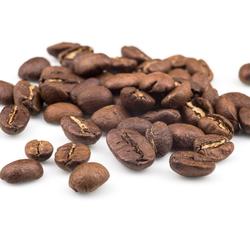


Guatemala SHB El Jaguar – Light Roast Coffee

Coffee with jaguar in the name? That's sure to be intense, exotic, strong and a little mystical. Don't believe it? Then try our light roasted Guatemala SHB El Jaguar and all the doubts with disappear. You'll get a beautiful, rich flavor body and notes of fresh fruit. This rainforest arabica will win you over from the first sip.
Shipping methods
| Nizozemská pošta HD - zásilkovna | Delivered by 8. 10. | 1,00 € |
|---|---|---|
 DHL DHL |
Delivered by 8. 10. | 4,90 € |


Ingredients
100 % ArabicaTaste & Crema
Guatemala SHB El Jaguar light roast is primarily intended to be brewed on a filter. Only a high-quality filter or AeroPress will bring out the wonderful notes of juicy fruit. This arabica is rich and has low acidity, so it's especially popular among lovers of sweet coffee.
Origins

Coffee cultivation began to develop in Guatemala around 1850. For most of the 20th and 21st centuries, the country was ranked among the top producers. Small plantations flourished mainly in the Amatitlán and Antiqua regions of southwestern Guatemala. The biggest obstacle to the cultivation of coffee trees was initially a shortage of workers. Today, most plantations are located around Guatemala City, Chimaltenango and Verapaz. Guatemala is considered the country that produces the highest percentage of high-quality coffee.
The growth of coffee trees benefits most from temperatures of 16-32⁰C. On plantations at altitudes of 500-700m, the young plants need to be protected by shading from cold northerly winds. However, coffee trees are usually grown at altitudes from 500m upwards.
Guatemala SHB El Jaguar does not grow in open plantations covered with nets or mats. Its growers have taken advantage of the unique conditions of the tropical rainforest of the Alta Verapaz and Baja Verapaz regions in north-central Guatemala. In addition to the 64 archaeological sites dating back to the Mayan period, the unspoilt rainforest, the Crystal River with its waterfalls, the limestone canyon, the cardamom plantations and, of course, the coffee plantations are not to be overlooked.
Farmers take advantage of the unique rainforest climate and the limestone and clay soil to grow coffee trees. Coffee grows in very high humidity, and its flavor is also affected by frequent rains and temperatures of 15-20⁰C.
Biologists from all over the world come to admire the local nature. It is less than 50km from Cobán, the capital of Alta Verapaz. The whole area is a popular ecotourism destination. It is a must for any visitor to see the rare, strikingly colorful, crested quetzal bird, which plays a major role in local mythology. And we cannot forget the jaguars which live here in very large groups. The existence of this big cat is threatened due to deforestation, so to spread awareness, this coffee got to adopt their name.
The coffee harvest depends on the seasonal influx of workers. The farms are usually without permanent staff, and hiring workers brings significant savings. Since 1997, farmers have organised themselves into cooperatives to ensure that the coffee is exported and that the price is stable. This keeps farmers on their land. In the past, low coffee prices often forced them to emigrate to Mexico or the USA.
Guatemala SHB El Jaguar coffee was processed using the so-called wet method. In this process, the coffee beans are first dehulled in water and then fermented for up to 36 hours, again in water. The length and course of fermentation will affect the entire batch, a few moldy beans can ruin the entire batch. So it's necessary to keep a close eye on the whole process. When it's finished, farmers dry the coffee either in the sun or in special dryers.
Wet-process coffees taste fresh and fruity. However, they are more expensive than dry-processed coffees. 130-150l of water are needed per 1kg.
SBH in the name of this coffee means the hardest bean and the highest quality.


Benefits of coffee


Coffee packaging preview
Our quality aluminum packaging lacks any bold graphics, as we’d rather focus on the taste of our coffee. It always comes fresh thanks to degassing valve, which releases the gases that occur after roasting. Thanks to the hermetic seal, this container helps the contents further keep their freshness and protect them against humidity, light or foreign odors.
Instructions for preparation
- Coarsely grind your coffee.
- Use 14ml of water per 1g of coffee. For 1 cup of coffee use 7g.
- Using circular motions, cover the coffee with boiled water (93°C).


Are you looking for inspiration? Other customers have bought this:
Brazil Santos NY2 SSFC 17/18 – Roasted Coffee
Robusta India Monsooned – Roasted Coffee