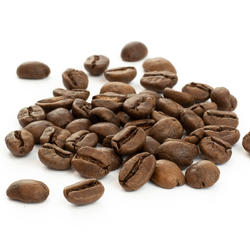


Mexico HG Swiss Water Decaf - coffee beans

The only thing this Mexican delicacy lacks is caffeine. Gourmets and coffee connoisseurs will find this coffee to be a delight. The mountains have imbued the beans with the taste of juicy fruit, dark chocolate, and fine tobacco, while the locals have ensured each bean is processed correctly. Enjoying Chiapas quality lies with you whenever you desire, even in the evening. Where there is no caffeine, there is a sweet and long sleep.
Shipping methods
| Nizozemská pošta HD - zásilkovna | Delivered by 22. 10. | 1,00 € |
|---|---|---|
 DHL DHL |
Delivered by 22. 10. | 4,90 € |


Ingredients
100 % ArabicaCrema and flavour of the coffee
Mexico HG Swiss Water Decaf coffee beans are rich, full-bodied, and flavourful. You will find tropical fruits, nuts, chocolate, and a pleasant tobacco undertone. Decaffeination does not affect the taste or aroma of the coffee in any way. Because it is an arabica, expect a lower, smooth, cohesive crema.
Origin of the coffee

The Mexican region of Chiapas is home to ancient Mayan cultures, an area of spectacular natural beauty, and a destination for tourists worldwide. It can be found in the southeast of Mexico, near the border with Oaxaca, Veracruz, and Tabasco. The waters of the Pacific Ocean wash its coastline, and its hills are often shrouded in fog. Chiapas has a humid, tropical climate, with an average annual rainfall of around 3,000 mm annually. The high humidity and mild climate are typical of the mountain ranges, which lend themselves to cultivating many plants, not least coffee plants.
The Caturra variety is one of the most abundant here. The plants are smaller, compact in stature, with good yield potential, but very susceptible to pruning and fungal diseases. Caturra is a natural mutation of Bourbon, which was discovered in Brazil at the beginning of the 20th century. Thanks to a gene mutation, Caturra coffee trees are smaller and can be grown more closely together, thus giving a higher yield per hectare. The coffee plants of this variety are in their third year of fruiting, specifically in Mexico, coffee cherries are harvested from January to March. It is one of the most economically valuable coffee varieties in Central America.
Coffee is ""made"" using the wet method. That means the fruit of the coffee plant is first put into water, in which the ripe and unripe pieces are separated. The ripe cherries must be pressed through crushing plates to remove the top skin. The coffee is then poured into water barrels, where it ferments for several hours or days. During the natural process, the pulp enveloping the coffee beans dissolves. These are further dried either in direct sunlight or in drying ovens.
Since Mexico HG Swiss Water Decaf does not contain caffeine, we will also describe how the stimulant was removed. The Mountain Water Decaf method is interesting, showing that coffee beans can lose caffeine but retain all the precious flavours and aromas. Only water and carbon filters play a role in the whole process. Workers first soak the green coffee beans in water extremely pure, originating on the Pico de Orizaba (Mexico's highest mountain - 5,636 metres above sea level - is one of the country's three-year-round snow-capped peaks). That is how they extract the oils and caffeine. These remain in the water, which is passed through carbon filters. The result is water-decaffeinated but full of the natural taste of coffee. The beans are returned to the water to take back all the flavour nuances and the amazing aroma and flavour. In that way, coffee can be decaffeinated up to 99.9 % without using chemicals.
Decaffeinated coffee beans can be used the same way as caffeinated coffee, on a filter, in automatic coffee machines, and so on. It can be enjoyed by people suffering from sleep disorders and is suitable for afternoon or early evening sipping. It is recommended for pregnant and breastfeeding women.
Benefits of coffee


Coffee packaging preview
Our quality aluminum packaging lacks any bold graphics, as we’d rather focus on the taste of our coffee. It always comes fresh thanks to degassing valve, which releases the gases that occur after roasting. Thanks to the hermetic seal, this container helps the contents further keep their freshness and protect them against humidity, light or foreign odors.
Instructions for preparation
- Grind the coffee to a coarseness appropriate for this type of preparation.
- Use 1.5-2 teaspoons (approx. 7 g) of ground coffee for each cup.
- Pour on water (95°C).


Are you looking for inspiration? Other customers have bought this:
Brazil Minas Swiss Water Decaf – Roasted Coffee
Peru Grade1 Swiss Water Decaf – Organic Roasted Coffee