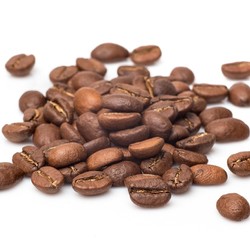


Papua New Guinea SHG PB – Roasted Coffee

Take a look at this coffee. These aren't ordinary coffee beans, these are pearls. The distinctive harvest of high-altitude coffee, known as peaberry, has been procured from the small plantations of Papua New Guinea. The combination of cooler air, higher rainfall, year-round attention from local farmers, and slight mutations in the fruit's development has yielded a subtly caramel, gently chocolatey, and freshly citrus coffee. Give into it.
Shipping methods
| Nizozemská pošta HD - zásilkovna | Delivered by 29. 10. | 1,00 € |
|---|---|---|
 DHL DHL |
Delivered by 29. 10. | 4,90 € |


Ingredients
100 % ArabicaTaste & Crema
Papua New Guinea SHG PB coffee has a delightful, full-bodied, caramel-chocolate flavor. You will enjoy a touch of citrus in the finish, which adds a fresh and lovely finish to the final cup. There is also a welcome trace of exotic spices. Its medium acidity makes it one of the most popular coffees. The crema is subtle but cohesive.
Origins

You have just stumbled upon a coffee that is unique in every way. Round coffee beans are rarely found in the fruit of coffee plants. The so-called Peaberry (caracolillo in Spanish) can only be found in 5% of all coffee cherries. After pollination, the flowers of the coffee plant (Coffea) usually develop into a fruit (coffee cherry) containing two seeds (coffee beans). In rare cases, however, there is only one bean in the cherry, a round one. Even scientists have not yet been able to explain this rare mutation. But that does not change the fact that Peaberry is one of the most sought-after beans.
The harvest in which the so-called pearls appear is usually picked. In addition to their atypical shape, their characteristics include a higher hardness and a more distinct aroma. For this reason, peaberries are roasted using a specialized process that allows the heat to penetrate the entire grain. The result is a coffee with an intense flavor and unique profile.
When describing the advantages of Papua New Guinea SHG PB coffee, we must not forget the place from which it comes. Although Papua New Guinea accounts for just 1% of the world coffee market, its place among producers is undeniable. It exports an overwhelming majority of high-quality arabica, which, thanks to cultivation in remote locations in the mountains, has the characteristics of organic coffee. Coffee farms provide a livelihood for around 40% of the local population, the vast majority of whom own truly miniature plantations.
The province of Goroka lies in the country's eastern highlands at an altitude of around 1,600m. Its mild climate is known as the "eternal spring". The days are pleasantly warm, and the nights are refreshingly cool. The main crop of the local farmers is coffee trees, which can be found almost all over the region. However, old plantations are gradually being demolished, often due to a lack of infrastructure. But new plantations are being established by farmers high up in the mountains, in places without previous human influence. Therefore, the harvest is exceptionally clean and high quality.
Red coffee cherries are harvested between May and August in Papua New Guinea. They are processed by what is known as the washing process, using water. The coffee is stripped of its skins (mechanically) and pulp (by fermentation) in water. The green coffee beans are then dried in tumble dryers or direct sunlight.


Benefits of coffee


Coffee packaging preview
Our quality aluminum packaging lacks any bold graphics, as we’d rather focus on the taste of our coffee. It always comes fresh thanks to degassing valve, which releases the gases that occur after roasting. Thanks to the hermetic seal, this container helps the contents further keep their freshness and protect them against humidity, light or foreign odors.
Instructions for preparation
Grind your coffee according to your preferred method.
Use 14ml of water per 1g of coffee. For 1 cup of coffee use 7g.
Add your coffee and cover with boiled water (95°C).


Are you looking for inspiration? Other customers have bought this:
Brazil Santos NY2 SSFC 17/18 – Roasted Coffee
Colombia Supremo Medelin Andeano – Roasted Coffee