

Peanut Butter – Flavored Roasted Coffee

If you love American sweets, you should try peanut butter-flavored coffee. The popular sweet saltiness of peanuts is unmistakable and will captivate you with the first sip. It's worth noting that peanuts are not actually nuts and were not discovered by modern farmers, but the ancient Aztecs. Around 44 million tonnes of peanuts are harvested worldwide each year.
Shipping methods
| Nizozemská pošta HD - zásilkovna | Delivered by 22. 10. | 1,00 € |
|---|---|---|
 DHL DHL |
Delivered by 22. 10. | 4,90 € |


Ingredients
100 % Arabica, AromaTaste & Crema
The basis of Peanut Butter coffee beans is small-scale arabica, so the resulting drink has maximum quality and great taste. During the roasting process, we added a natural aroma to the coffee beans, which gives the coffee attractive notes of slightly salty peanuts.
Origins
There is no doubt about the quality of high-altitude coffee from Peru. It is proven by the long local history of growing coffee trees (Coffea arabica) and the success the in a number of competitions. However, this would be useless if Peruvian coffee was not loved by people worldwide and prepared in every possible way daily. One way to introduce this goodness to coffee lovers is to flavor it with natural aromas. When the roaster chooses the highest quality aroma and plays with the roasting process, the result is a coffee that everyone is happy to reach for. And that is the case with Peanut Butter flavored coffee.
Peruvians have been growing coffee plants in the barely accessible hills since around the 17th century. They focus mainly on the Typica variety, which is well adapted to the cool mountain conditions and produces a high-quality bean. On the other hand, shrubs have low production and are susceptible to certain diseases. It was most recently evident in 2014 when almost half of Peru's plantations were affected by a rust epidemic. As a result, coffee production immediately dropped significantly. Today, Peru is slowly making a comeback among the world's major coffee exporters. In 2019, the volume of beans processed (around 4.3 million bags of coffee, each weighing 60kg, were produced) increased by 5% compared to the previous year, and the following seasons look optimistic.
Coffee farmers and the processing of their fruits are mainly smallholders. It is estimated that there are 110,000 of them in Peru, farming about 360,000 hectares of land.
Currently, Peruvian coffee accounts for less than a quarter of world production. The fruit of the coffee tree is harvested from May to September, mostly by hand due to the inaccessible terrain and long distances from any modern infrastructure. Farmers usually walk 30 minutes to the nearest processing site. Even when they transfer the fruit to the ''washing stations'', their work does not stop. The cherries must be poured into water and pushed through the pulping machines. With their help, the skin and some of the pulp enveloping the coffee beans are removed. To free them completely and allow the desired fermentation to take place, the workers transfer the coffee to other tanks of water where they leave them to ferment for several days. Finally, the beans need to be dried well in drying rooms or the sun.
Green coffee most often goes to roasters. For the Peanut Butter coffee beans, our roaster had a natural peanut aroma waiting for him, produced gently from natural substances (the aroma is therefore not synthetic and does not cause heartburn or other health problems). Before roasting, the coffee was sprayed with a carrier oil with an aroma to infuse it deep into the beans and maintain the aroma and flavor of the coffee for many weeks. In conclusion, allergy sufferers should take the necessary precautions because the natural aroma may contain traces of nuts.
Making Flavored Coffee in an Automatic Coffee Maker
 |
If you intend to make flavored coffee in an automatic coffee maker with a tray, we recommend checking the instructions for the coffee maker to ensure this is possible. If the machine manufacturer does not provide any information on flavored coffee, follow these recommendations: The natural aroma in this coffee may react with the plastic in the tray and cause it to spot on prolonged contact.
Apply same rules when grinding flavored coffee in grinders (both manual and electric). |
Benefits of coffee


Coffee packaging preview
Our quality aluminum packaging lacks any bold graphics, as we’d rather focus on the taste of our coffee. It always comes fresh thanks to degassing valve, which releases the gases that occur after roasting. Thanks to the hermetic seal, this container helps the contents further keep their freshness and protect them against humidity, light or foreign odors.
Instructions for preparation
Grind your coffee according to your preferred method.
Use 14ml of water per 1g of coffee. For 1 cup of coffee use 7g.
Add your coffee and cover with boiled water (95°C).


Are you looking for inspiration? Other customers have bought this:
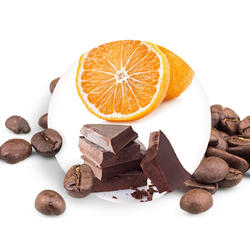
Chocolate-Orange – Flavored Roasted Coffee
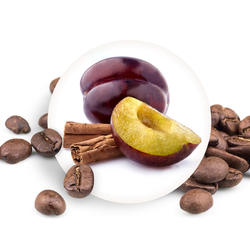
Cinnamon Plum – Flavored Roasted Coffee