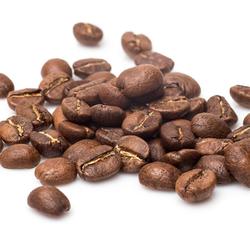


Uganda AA Mount Rwenzori – Roasted Coffee

At the very top, there lies a kingdom of snow and ice. But below the Rwenzori Mountains in eastern equatorial Africa, rainforests are green and rivers and streams are clear. Most of the fascinating mountain range has been declared a national park. There, somewhere, at an altitude of over 1,000m, farmers grow coffee trees that produce coffee with a rich and harmonious flavor. Freshly roasted AA arabica will take you under the African glaciers in a single sip.
Shipping methods
| Nizozemská pošta HD - zásilkovna | Delivered by 22. 10. | 1,00 € |
|---|---|---|
 DHL DHL |
Delivered by 22. 10. | 4,90 € |


Ingredients
100 % ArabicaTaste & Crema
The Uganda AA Ruwenzori Coffee will please fans of beverages with milder acidity and rich, fruity flavor. You can notice hints of nougat and roasted nuts. Just like Central Africa, it's colourful, yet subtle and harmonious. You can also look forward to a compact, medium high foam.
Origins

Connoisseurs say coffee from Uganda has a big future. If you haven't heard of it before, you may be interested in its origins. Here it is: Uganda borders Kenya, South Sudan, the Democratic Republic of Congo, Rwanda and Tanzania. Its name comes from the indigenous Buganda and is often referred to as the "pearl of Africa". It lies in the Nile basin, which is fed by one of the rivers flowing from the glaciers in the Rwenzori Mountains.
The average altitude in this country is around 1,100m. Most of Uganda's land area is influenced by huge bodies of water such as Kyoga, Albert, Edward, George, Victoria lakes. In terms of natural diversity, it is sufficient to note that there are 60 protected areas in Uganda, including 10 national parks. Even so, scientists say ecological stability is being disrupted by long-term global warming.
The climate is, of course, tropical. Rainfall occurs year-round in the forested areas, while long dry spells are not uncommon in the north.
Mount Ruwenzori, after which the coffee is named, lies on the border dividing Uganda and the Democratic Republic of Congo. Its highest peaks are over 5,000m and permanently covered in snow and ice. Anyone ascending from the base of the mountain would pass through tropical rainforest, alpine meadows, mountain forest, bamboo zones and moors. Eventually, you would stand on one of 43 glaciers covering 7.5km2.
Coffee trees are grown on volcanic soil in Uganda, under the shade of trees that allow them to thrive. They are usually harvested from March to April and August to November. Farmers process the fruit using the wet method, and dry them in the sun. The quality of the coffee is managed by the Uganda Coffee Association, which also ensures its processing and sale in the markets. Coffee is Uganda's most important export crop.
The AA mark in the coffee name refers to the extra-large beans.


Benefits of coffee


Coffee packaging preview
Our quality aluminum packaging lacks any bold graphics, as we’d rather focus on the taste of our coffee. It always comes fresh thanks to degassing valve, which releases the gases that occur after roasting. Thanks to the hermetic seal, this container helps the contents further keep their freshness and protect them against humidity, light or foreign odors.
Instructions for preparation
Grind your coffee according to your preferred method.
Use 14ml of water per 1g of coffee. For 1 cup of coffee use 7g.
Add your coffee and pour over with boiled water (95°C).


Are you looking for inspiration? Other customers have bought this:
Brazil Santos NY2 SSFC 17/18 – Roasted Coffee
Robusta India Monsooned – Roasted Coffee