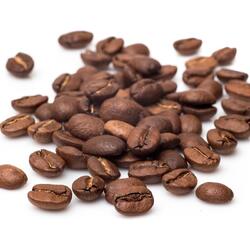


EAST TIMOR - coffee beans


Small in size, yet big with a love for coffee. East Timor is a country with a difficult situation. Yet, it gifts the world with exceptional quality coffee and impeccable taste. Unique hybrid coffee plants are grown by rural farmers who rely only on outdated infrastructure and a fluctuating economy. Fortunately, they possess skilful hands and an abundance of experience. The result is coffee beans that leading specialist Alf Kramer describes as "among the top 1% in quality and price worldwide".
Shipping methods
| Nizozemská pošta HD - zásilkovna | Delivered by 22. 10. | 1,00 € |
|---|---|---|
 DHL DHL |
Delivered by 22. 10. | 4,90 € |


Ingredients
100 % ArabicaCrema and flavour of the coffee
Arabica East Timor is one of the low-acid coffees. It is smooth and light, yet you can clearly detect chocolate, cocoa, and a hint of spice in its flavour. It smells lovely, with a faint citrus-chocolate aroma. You can also expect a low but fluffy and stable crema.
Origin of the coffee
We will move with a finger on the map together. Turn your attention to Australia and focus on the Lesser Sunda Archipelago, about 400 kilometres above it. Then, to its east, look for a country called Timor Leste, or East Timor. It ranks 154th in land area (14,609 km²) and 98th in population density (69 inhabitants per km²). About half of the population can read and write, the vast majority is engaged in agricultural activities, and the country prospers mainly from oil extraction.
Timor-Leste's history is very complex and, at times, harsh. It declared independence in 1975 but did not achieve world recognition until 2002. Today, it is a developing country with a slightly improving political situation. What kind of coffee can we expect from Timor-Leste's farmers? One of the best and most unique in the world, according to The National Co-operative Business Association.
This statement is also confirmed by Alf Kramer, an expert and the first president of the Specialty Coffee Association, and by Starbucks, among other buyers, whose CEO Linneman appreciates the coffee's global quality and local origin. The coffee industry is one of the main pillars of the local economy. It is reported that coffee production employs around 200,000 people, mainly in Maubesse, Aifu, and Liquica districts. However, half of the production is in the Ermera area. It is important to note that coffee production in Timor-Leste is based on the cultivation of semi-wild plantations. The access roads are in sadly poor condition, and even the processing of the coffee beans is not carried out using modern machinery and equipment. Despite this, farmers manage to grow and export coffee of superior quality.
Coffee plants are grown at an altitude of 1000-1600 metres. Often these plants are the result of an unstructured cross between Coffea arabica and Coffea canephora called Hybrido de Timor. The advantage of the hybrid variant of Arabica and Robusta is that it retains the characteristics of both cultivated coffees while being able to grow in the less favourable conditions of the island's hills, including high yields. The climate in Timor-Leste is not entirely optimal for coffee plants, with long droughts interspersed with short periods of rain and many areas where the soil is naturally less fertile. Nevertheless, local farmers do not use pesticides, so all production can be considered organic. They combat the drought by growing plants in the shade. The fruit is harvested from May to October and processed by what is known as washing.
About 104,000 bags (1 bag = 60 kg) go out of Timor-Leste annually, making the country the 28th largest coffee producer.
Benefits of coffee


Coffee packaging preview
Our quality aluminum packaging lacks any bold graphics, as we’d rather focus on the taste of our coffee. It always comes fresh thanks to degassing valve, which releases the gases that occur after roasting. Thanks to the hermetic seal, this container helps the contents further keep their freshness and protect them against humidity, light or foreign odors.
Instructions for preparation
- Grind the coffee to a coarseness appropriate for this type of preparation.
- Use 1.5-2 teaspoons (approx. 7 g) of ground coffee for each cup.
- Pour on water (95°C).


Are you looking for inspiration? Other customers have bought this:
Brazil Santos NY2 SSFC 17/18 – Roasted Coffee
Brazil South of Minas – Roasted Coffee