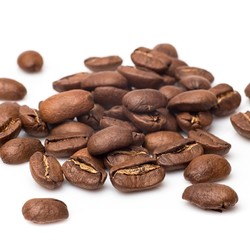


Guatemala Maragogype – Roasted Coffee

Coffee without compromises? Guatemala Maragogype is from the rough yet beautiful Huehuetenango region! These beans rank among the largest in the world and their taste is one of the best available. You’ll be surprised by the complexity, prominent fruit notes, and juicy acidity. Unique, real, and full.
Shipping methods
| Nizozemská pošta HD - zásilkovna | Delivered by 25. 9. | 1,00 € |
|---|---|---|
 DHL DHL |
Delivered by 25. 9. | 4,90 € |


Ingredients
100 % ArabicaTaste & Crema
Guatemala Maragogype coffee is like a Sunday market bustling with vibrant fruit and aromas. The taste is dominated by notes of oranges as well as red berry fruit; from strawberries, raspberries, and currants all the way to cherries or cranberries depending on how you choose to prepare it. This entire refreshingly fruity composition is underlined with the subtle, smooth taste of chocolate. The high acidity level, typical for coffees grown in high altitudes, adds a refreshing spark. If you’re looking for a layered experience that’ll stay with you long after the last sip, this is it.
Origins

Guatemala Maragogype comes from the interesting Huehuetenango region, which is one of eight officially recognized coffee regions in Guatemala. The high-altitude plantations located near the border with Mexico are among the most remote but also the most valuable growing areas in the entire country. Thanks to an altitude of between 1,800 and 2,000 meters, a dry microclimate, and cold winds flowing from the Mexican Sierra Madre mountains, the coffee trees (Coffea arabica) ripen slowly and develop a complex flavor profile with increased acidity. This is exactly what makes this coffee so special.
The Maragogype variety is essentially a genetic rarity. A natural mutation of the well-known Arabica Typica, it first appeared in 1870 near the Brazilian town of Maragogipe. It’s characterized by exceptionally large leaves, wide spacing between branches, and huge stones inside the fruit – the coffee beans. It’s also why it has earned the nickname ‘elephant coffee’. However, it’s incredibly difficult to grow, provides low yields, has low resistance to disease (especially coffee rust), and requires considerable care. Still, Huehuetenango is full of this cultivar. Why? Because when it thrives, its flavor far surpasses that of other common arabica varieties.
In this case, the farmers processed the coffee using the traditional washed method. After carefully hand-picking the ripe coffee cherries, they removed their skins in water and then left the beans to ferment for up to 48 hours. The resulting coffee was then thoroughly washed, spread out in the sun, and dried for about two weeks.
Let's talk a little more about the history of Guatemalan coffee. It dates back to the early 18th century, when Jesuit missionaries brought the first coffee trees into the country. However, the real boom didn’t occur until the 19th century. At that time, coffee began to replace indigo as the main export crop. Today, coffee cultivation is the livelihood of more than 125,000 small farmers, who mainly cultivate family plots of up to 2 hectares. The country produces exclusively arabica, with the best-known varieties being Bourbon, Caturra, Catuai, Typica, and, of course, the rare Maragogype. The most important coffee-growing areas include Antigua, Cobán, Atitlán, Fraijanes, Acatenango, and Huehuetenango.
Guatemalan coffee is known for its high acidity, floral and fruity notes, and elegant sweetness. Production is largely certified as Fair Trade, Rainforest Alliance, or Organic. In 2012, however, the local coffee industry was hit by an epidemic of coffee rust, which damaged a large number of plantations, with the Maragogype variety especially vulnerable. Nevertheless, the country has remained a global symbol of specialty coffee, and the quality of its production has been repeatedly recognized at prestigious competitions such as the Cup of Excellence.
Benefits of coffee


Coffee packaging preview
Our quality aluminum packaging lacks any bold graphics, as we’d rather focus on the taste of our coffee. It always comes fresh thanks to degassing valve, which releases the gases that occur after roasting. Thanks to the hermetic seal, this container helps the contents further keep their freshness and protect them against humidity, light or foreign odors.
Instructions for preparation
- Grind your coffee according to your preferred method.
- Use 14ml of water per 1g of coffee. For 1 cup of coffee use 7g.
- Add your coffee and pour over with boiled water (95°C).


Are you looking for inspiration? Other customers have bought this:
Brazil Santos NY2 SSFC 17/18 – Roasted Coffee
Mexico Altura – Roasted Coffee