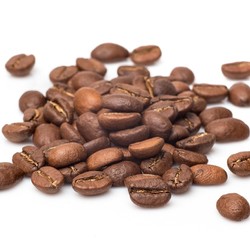


Honduras SHG BIO Swiss Water Decaf – Organic Light Roast Coffee

Organic, decaffeinated, and lightly roasted. You can enjoy a cup of Honduras SHG BIO Swiss Water Decaf even when you're done with caffeine for the day. Light roasting reveals the full character of coffee beans from Honduras – sweet notes of chocolate and caramel as well as more intense, juicy notes of redcurrant with a pleasant acidity. Brew it on a filter and discover just how tasty decaf coffee can be.
Shipping methods
| Nizozemská pošta HD - zásilkovna | 1,00 € | |
|---|---|---|
 DHL DHL |
4,90 € |


Ingredients
100 % Arabica BIOTaste & Crema
If only lightly roasted, Honduras SHG Swiss Water Decaf becomes lighter and livelier. The sweet notes of caramel and chocolate are still perfectly clear in the taste, but the redcurrant gains a much larger footing. It's the latter that brings refreshing fruitiness and higher acidity that's typical for coffees roasted for the pour-over method. The resulting taste is clear, layered, and pleasantly juicy, with contrasting sweet and fruity notes. And caffeine? You won't even notice it's absent. Thanks to the Swiss Water Decaf method, this coffee retains its characteristic aroma and taste, just without the popular stimulant.
Origins

In Honduras, more than 100,000 families grow coffee, and about three-quarters of them farm on less than 2 hectares. Plantations are typically located at an elevation of around 1,500 meters. This is also the case with the organic decaffeinated Honduras SHG (where SHG stands for Strictly High Grown), which comes from the Copán region in the western part of the country. In addition to being a major producer of high-quality coffee, you may also recognize the name from the famous local archaeological site – one of the largest cities of the Maya civilization.
This coffee was grown and produced by farmers affiliated with the Cooperativa Cafetalera Capucas Limitada, an organization dedicated to supporting farmers, providing them with education, and promoting tourism (primarily ecotourism). The cooperative also operates a restaurant, several greenhouses, and even keeps bees. Its main goal is to enable its members to achieve economic growth and independence. Thanks to this, some farms are able to focus on growing coffee that's certified as organic. Producing organic-quality coffee is more demanding and costly because, without industrially produced pesticides and fertilizers, coffee trees yield lower harvests and are less resistant to pests.
You may also be wondering how the coffee beans were decaffeinated. This was done using the Swiss Water process; a certified process in which the coffee is immersed in hot water, and the extracted caffeine is captured in activated-carbon filters. The filtration is a continuous cycle that lasts several hours. Because caffeine molecules are relatively large, they remain in the filters, while the molecules of aromatic compounds and other substances that contribute to the coffee’s unique flavor and aroma pass through the filters and return to the beans. The greatest advantage of the Swiss decaffeination method is that it uses absolutely no chemical solvents, and the water used in the process is returned to the coffee plants as irrigation.
Benefits of coffee


Coffee packaging preview
Our quality aluminum packaging lacks any bold graphics, as we’d rather focus on the taste of our coffee. It always comes fresh thanks to degassing valve, which releases the gases that occur after roasting. Thanks to the hermetic seal, this container helps the contents further keep their freshness and protect them against humidity, light or foreign odors.
Instructions for preparation
- Coarsely grind your coffee.
- For every 14 ml of water, add 1g of coffee to a V60 filter.
- Using circular motions, pour boiled water (93°C) over the coffee.


Are you looking for inspiration? Other customers have bought this:
Brazil Yellow B. Fazenda Da Lagoa – Roasted Coffee
Colombia Supremo Medelin Andeano – Roasted Coffee