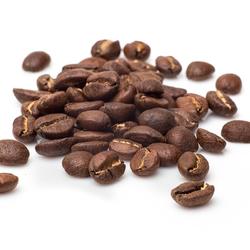


Kenya Peaberry Kiriniyaga Washed – Roasted Coffee

Wanna know why Kenya ranks among the world’s top coffee producers? Try Kenya Peaberry Kiriniyaga. You’ll be met with lively, juicy, and elegant coffee that’s maximum quality and perfectly comprehensible at the same time. It originates in the fertile slopes of Kirinyaga, and being the SL34 variety gives it its famous complexity and “spark”. As a bonus, it’s also a natural rarity – peaberry coffee comes from a single rounded kernel instead of the usual two. The result is more aromatic and often surprisingly juicy.
Shipping methods
| Nizozemská pošta HD - zásilkovna | Delivered by 22. 10. | 1,00 € |
|---|---|---|
 DHL DHL |
Delivered by 22. 10. | 4,90 € |


Ingredients
100 % ArabicaTaste & Crema
The focus of Kenya Peaberry Kiriniyaga taste profile is clearly discernible notes of fruit reminiscent of redcurrant, cranberries, and citrus peel. This type of fruity profile is literally synonymous with Kenya: pure, to the point, with energy and a juicy aftertaste on the palate. What’s more, the background is filled with soft floral nuance. Thanks to being a fully washed coffee, the acidity is structured and clear – fresh and lively, yet still cultured. The body is light to medium and smooth as well as pure. The lasting aftertaste presents notes of fruit that pleasantly unfold and smooth out into a soft tea-like impression with a decent sweetness to it.
Origins

Kenya Peaberry comes from the Kirinyaga region, located on the southern to southeastern slopes of Mount Kenya, at an altitude of 1,600–1,800 meters above sea level. It’s this combination of altitude and location that is key to Kenyan coffee; warm days and cooler nights slow down the ripening of the cherries, allowing them to develop a higher concentration of aromas and a more pronounced but beautifully structured acidity. Kirinyaga is also known for its fertile volcanic soils and good rainfall throughout the year, which provides stable conditions for coffee trees and gives growers the chance to harvest ripe cherries in optimal condition
Fully washed processing also plays an important role. Kenya is renowned for its attention to detail in this regard: after harvesting, the cherries are peeled, fermented, and then washed to remove any remaining pulp and mucilage from the beans. It is this method that gives Kenyan coffees their typical purity and clearly defined flavor layers.
Another pillar of Kenyan coffee's excellent reputation is the choice of the SL34 variety. It was developed in Kenya (along with the famous SL28) and is still prized today for its complex taste, juiciness, and distinctive but smooth acidity. Under Kenyan conditions, SL34 gives a flavor profile that people describe as ""currant-like"" or ""citrusy"", including a typical, almost wine-like juiciness that, in good Kenyan coffee, is not aggressive but lively and energetic. From a cultivation perspective, SL34 is also known for its ability to cope well with humidity and, in some regions, is also popular for its stable yield when the conditions are right.
And now for what makes this coffee even more special: peaberries. Most coffee cherries contain two seeds, which press against each other as they grow, creating the typical flat shape of the beans. With peaberries, a natural mutation occurs – only one seed develops and takes up the entire space in the cherry. This is why it is smaller, round, and compact. It’s a rarity: usually only about 5-10% of the harvest develops this way, so peaberries must be carefully separated during sorting. It’s not just a marketing label, but a truly specific fraction of beans that’s created by chance and then specifically selected.
But why exactly is there so much talk around peaberries? Well, the round shape and denser structure of the bean can affect both roasting and extraction. Peaberries are often roasted more evenly (heat spreads differently in the bean than in flat beans) and, in terms of flavor, are associated with more pronounced ""top"" aromatic notes, livelier acidity, and a lighter to more elegant body. This is not a universal rule for every peaberry coffee in the world, but in Kenya – especially in SL varieties – this combination is often found in a very attractive form: a clean washed profile, juicy fruit, and sparkling acidity that is precise rather than sharp.
If you want to experience Kenya in its juiciest and purest form, treat yourself to Kenya Peaberry. Let yourself be drawn into its currant-citrus sparkle from the very first sip.
Benefits of coffee


Coffee packaging preview
Our quality aluminum packaging lacks any bold graphics, as we’d rather focus on the taste of our coffee. It always comes fresh thanks to degassing valve, which releases the gases that occur after roasting. Thanks to the hermetic seal, this container helps the contents further keep their freshness and protect them against humidity, light or foreign odors.
Instructions for preparation
- Grind your coffee according to your preferred method.
- Use 14ml of water per 1g of coffee. For 1 cup of coffee use 7g.
- Add your coffee and cover with boiled water (95°C).


Are you looking for inspiration? Other customers have bought this:
Mexico Altura – Roasted Coffee
Ethiopia Djimmah – Roasted Coffee